TAP TO CALL AND BOOK YOUR APPOINTMENT
Next Level Physical Therapy
(609) 623-5964
REQUEST AN APPOINTMENT
Next Level Physical Therapy
  • Services
    • Physical Therapy
    • Sports Rehabilitation
    • Post-Surgical Rehabilitation
    • Running Gait Analysis
    • Functional Movement Screen (FMS)
    • Dry Needling
    • Personal Training
    • Online Program
  • What We Treat
    • Back Pain
    • Knee Pain
    • Hip Pain
    • Shoulder Pain
    • Head and Neck Pain
    • Ankle and Foot Pain
    • Elbow and Wrist Pain
  • Who Can Benefit
    • Athletes
    • Active Adults
    • Post-Surgery
  • Resources
    • Blog
    • Guides
    • FAQ
  • Testimonials
  • About Us
    • Meet the Team
    • Careers
  • Contact Us
  • Locations
    • Bridgewater NJ
    • Hamilton NJ
    • Marlton NJ
    • Narberth PA
    • Southampton PA

Resources

Explore our blog, guides, and FAQs for insights and tips that support your recovery and performance.

Join our Facebook group

For access to exclusive training videos, answers to your questions, and a growing community of health focused individuals.
Join now
Read More
Bench Press Shoulder Pain: What Usually Causes It
Bench press shoulder pain is one of the most common frustrations for lifters, athletes, and active adults. You may feel strong in the gym, follow a consistent program, and still notice a sharp pinch, deep ache, or uncomfortable pressure in the shoulder every time you press. For some people, it shows up only with heavy bench press sets. For others, it starts bothering pushups, dumbbell presses, overhead movements, or even daily activities like reaching across the body. When this happens, the usual advice is often simple: fix your form, tuck your elbows, strengthen your rotator cuff, or stop benching for a while. Those suggestions may help in certain situations, but they rarely tell the full story. The bench press is not just a chest exercise. It requires the shoulder joint, shoulder blade, rib cage, upper back, trunk, and even lower body to work together so force can be produced and controlled efficiently. When one part of that system is not doing its job well, the shoulder often becomes the place that feels the stress. In this article, we will break down why bench press shoulder pain happens, what usually causes it, what mistakes to avoid, and how to get back to pressing without constantly irritating your shoulder. Why Shoulder Pain During Bench Press Is So Common The bench press is one of the most popular lifts in the gym. It is also one of the lifts most commonly associated with shoulder discomfort. That does not mean the bench press is bad for your shoulders. The problem is usually not the exercise itself. The problem is the combination of load, repetition, positioning, and movement limitations. During the bench press, the shoulder moves into a position that requires control through the front of the shoulder, the shoulder blade, the upper back, and the rotator cuff. As the bar lowers, the shoulder has to tolerate increasing stretch and tension while maintaining a stable position. As you press back up, the body has to produce force without letting the shoulder glide forward or lose control. If the shoulder cannot manage that position well, pain can develop. This is especially common when lifters increase volume or intensity too quickly, bench multiple times per week, or push through discomfort because they do not want to lose progress. What Bench Press Shoulder Pain Usually Feels Like Bench press shoulder pain can show up in a few different ways. Some lifters feel a sharp pinch in the front of the shoulder as the bar approaches the chest. Others feel a deep ache after pressing sessions. Some notice pain only during heavier sets, while others feel discomfort even during warmups. Common symptoms include: Pain in the front of the shoulder during the lowering phase A pinching feeling near the top or front of the shoulder Discomfort when pressing the bar back up Pain with pushups, dips, or dumbbell pressing Shoulder soreness that lingers after training Difficulty finding a comfortable bench press setup A feeling that one shoulder does not sit or move like the other These symptoms do not automatically mean something is seriously damaged. They do mean the shoulder is having trouble tolerating the demands being placed on it. Why Does My Shoulder Hurt When I Bench Press? There is rarely one single cause of bench press shoulder pain. More often, pain develops because several factors combine over time. The shoulder may be moving inefficiently, the training load may be too high, or the body may not have enough control in the positions the bench press requires. Here are some of the most common reasons shoulder pain shows up during bench press. 1. Poor Shoulder Blade Control The shoulder blade plays a major role in pressing. During bench press, the shoulder blade needs to provide a stable base for the arm. If the shoulder blade is not positioned or controlled well, the shoulder joint itself may take on more stress. This can lead to irritation in the front of the shoulder, especially as the bar gets closer to the chest. Many lifters are told to “pin the shoulder blades back and down.” While that cue can sometimes help, it is not always enough. The shoulder blade needs to be stable, but it also needs to work with the rib cage and upper back. If the rib cage is stiff or poorly positioned, the shoulder blade may not have a good surface to move or stabilize against. 2. Rib Cage and Upper Back Position The shoulder does not operate in isolation. It sits on the rib cage and depends heavily on the position of the upper back. If the rib cage is locked down, overly flared, or unable to expand well, the shoulder blade may struggle to find a strong position during pressing. This can create a situation where the shoulder feels unstable, pinchy, or compressed. Many lifters try to solve this by changing grip width or elbow angle. Those adjustments can help, but if the rib cage and thoracic spine are limiting shoulder position, technique changes alone may not fully solve the issue. 3. Rotator Cuff Weakness or Poor Coordination The rotator cuff helps keep the ball of the shoulder centered during movement. During bench press, the rotator cuff has to control the shoulder under load while the larger muscles produce force. If the rotator cuff is underprepared or poorly coordinated, the shoulder may lose control as load increases. This is one reason some lifters feel fine during lighter sets but develop pain when they go heavier. However, the answer is not always endless band external rotations. The rotator cuff eventually needs to be trained in positions and loads that carry over to pressing. 4. Too Much Stress on the Front of the Shoulder Bench press places the shoulder into extension as the bar lowers toward the chest. If the shoulder cannot control that position well, the front of the shoulder may become irritated. This is often described as anterior shoulder pain. Several factors can increase stress in this area, including: Lowering the bar too aggressively Letting the shoulders roll forward at the bottom Using a grip that is too wide for your shoulder structure Flaring the elbows excessively Benching with too much volume and not enough recovery Again, form matters. But form often reflects the body’s available mobility, control, and strength. 5. Limited Shoulder or Thoracic Mobility If the shoulder or upper back lacks mobility, the body may compensate during pressing. For example, if the upper back cannot extend well, the shoulder may have to move through a less efficient path. If the shoulder lacks controlled range, the front of the joint may feel compressed or irritated at the bottom of the press. This does not mean every lifter needs extreme flexibility. It means your body needs enough usable motion to perform the exercise you are asking it to perform. 6. Training Load Exceeds Capacity Sometimes the issue is not complicated. The shoulder is simply being asked to handle more stress than it is currently prepared for. This can happen after: Increasing bench press frequency Adding too much volume too quickly Training through soreness for several weeks Returning to pressing after time off Adding heavy accessory pressing without adjusting total load The shoulder may tolerate a certain amount of stress well, but when volume and intensity exceed capacity, irritation can build. Bench Press Shoulder Pain Is Not Always Just “Bad Form” Form matters, but it is not always the root problem. Many lifters are told their shoulder hurts because their elbows flare, their grip is wrong, or their bar path is off. Sometimes those things are part of the issue. But the bigger question is why the form breaks down in the first place. You cannot always cue your way into a position your body cannot access or control. If your shoulder blade cannot stabilize well, your rib cage cannot expand, or your upper back cannot support the position, your bench press technique will likely compensate. That is why two lifters can use the same cue and get completely different results. One body has the movement options to make the adjustment. The other does not. Common Mistakes Lifters Make With Shoulder Pain When shoulder pain starts during bench press, lifters often make a few predictable mistakes. Pushing Through Sharp Pain Training through mild discomfort is one thing. Pushing through sharp, increasing pain is different. If symptoms continue to worsen during a workout, your body is telling you the current strategy is not working. Only Resting Until It Feels Better Rest can calm symptoms, but it does not address why the pain happened. If you take a few weeks off and return to the exact same pressing volume, setup, and movement strategy, the pain often comes back. Only Doing Band Exercises Band work can be useful in the early stages, especially for improving awareness and low-level rotator cuff activation. But if your rehab never progresses beyond light bands, your shoulder may not be prepared for heavy pressing again. Overstretching the Front of the Shoulder Many lifters feel tight in the front of the shoulder and respond by aggressively stretching the pecs or front of the shoulder. Sometimes this helps temporarily. But if the shoulder already lacks stability or control, excessive stretching may not solve the real issue. Changing Grip or Elbow Position Without Addressing the System Technique changes can reduce symptoms, but they should not be the whole plan. If your shoulder pain is driven by poor rib cage position, limited scapular control, or training overload, grip changes alone may only provide short-term relief. What Actually Helps Bench Press Shoulder Pain? The goal is not necessarily to avoid bench pressing forever. The goal is to understand what your shoulder needs so it can handle pressing again. Effective rehab usually includes a combination of movement restoration, strength development, training modification, and gradual exposure. Improve Rib Cage and Thoracic Position Because the shoulder blade sits on the rib cage, improving rib cage position and upper back mobility can make pressing feel significantly better. This may include breathing drills, thoracic mobility work, and exercises that help the shoulder blade find a better position during movement. Restore Scapular Control The shoulder blade needs to provide a strong base for pressing. Scapular control exercises should help you learn how to manage the shoulder blade in positions that actually matter for pressing, not just in isolated low-load drills. Build Rotator Cuff Strength in Useful Positions The rotator cuff needs to control the shoulder under load. That means rehab should eventually progress into more challenging positions, including pressing variations, carries, closed-chain work, and controlled loading. Modify Pressing Temporarily You may not need to stop pressing completely, but you may need to modify how you press for a period of time. Useful modifications can include: Reducing load Reducing total pressing volume Using dumbbells instead of a barbell Using a neutral grip Limiting range of motion temporarily Adding tempo work Changing bench angle The goal is to keep training while reducing irritation. Progress Back Gradually Once symptoms calm down, the shoulder still needs time to rebuild capacity. Jumping straight back into previous numbers is one of the most common reasons pain returns. A better plan gradually increases load, range of motion, and pressing frequency while monitoring how the shoulder responds. When Physical Therapy Makes Sense If shoulder pain keeps returning every time you bench press, it is worth getting assessed. Physical therapy can help identify whether the issue is coming from: Shoulder mobility limitations Rotator cuff weakness or poor control Scapular movement issues Rib cage or thoracic restrictions Training load errors Pressing technique limitations The best approach does not just chase pain. It looks at how your shoulder functions within the larger system. Can You Keep Bench Pressing With Shoulder Pain? It depends. If the pain is mild, does not worsen during the workout, and settles quickly afterward, modified pressing may be appropriate. If the pain is sharp, worsening, or lingering for days after each session, continuing to push the same movement is probably not the best idea. The key is finding a version of pressing that your shoulder can tolerate while you address the underlying issue. That might mean switching to dumbbells, reducing range of motion, using a neutral grip, or temporarily emphasizing other upper-body strength work. The Bottom Line on Bench Press Shoulder Pain Bench press shoulder pain is common, but it is rarely just a simple form issue. Your shoulder may hurt because of how your shoulder blade moves, how your rib cage is positioned, how your rotator cuff controls load, or how much stress your training program is placing on the system. Fixing the issue usually requires more than rest, bands, or one technique cue. The goal is to restore movement, rebuild strength, manage load, and gradually return to pressing in a way your body can tolerate. When that happens, bench press can become a productive part of your training again instead of something you constantly have to work around. Need Help With Bench Press Shoulder Pain? At Next Level Physical Therapy, we help active adults, athletes, and lifters address shoulder pain by identifying the deeper movement and loading patterns that contribute to irritation. Our approach looks beyond the painful area and focuses on how your shoulder, rib cage, shoulder blade, trunk, and training habits work together. If bench press shoulder pain is limiting your workouts, our team can help you get back to pressing with more confidence. Request an appointment here to learn more about our movement-based approach to shoulder pain and physical therapy.
Read More
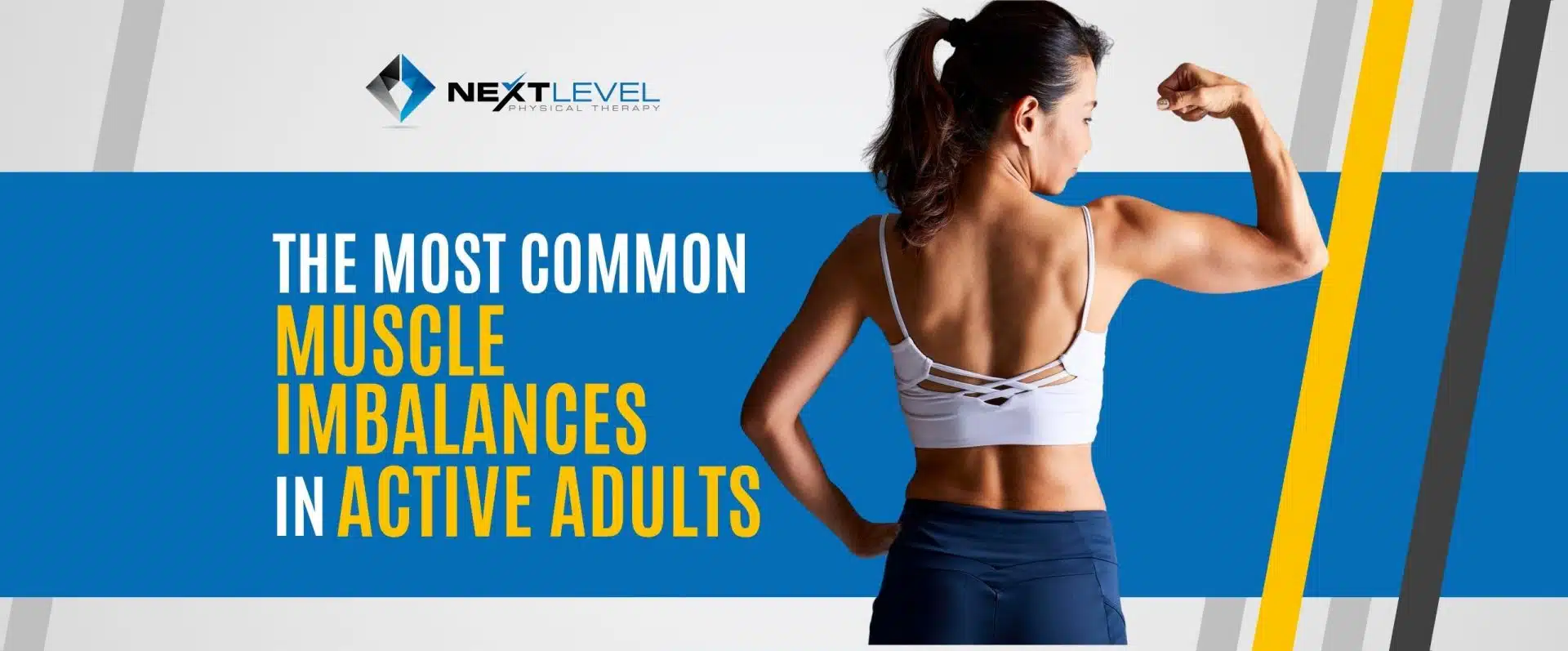
The Most Common Muscle Imbalances in Active Adults
Muscle imbalances are one of the most common things active adults worry about. If one side feels stronger than the other, one hip feels tighter, one shoulder sits differently, or certain muscles always seem to take over during workouts, it is easy to assume something is “off” and needs to be fixed. That concern is understandable. Muscle imbalances can affect movement, performance, comfort, and injury risk. But they are also commonly misunderstood. Not every asymmetry is a problem. Not every tight muscle needs stretching. Not every weak muscle needs isolated strengthening. The real question is not simply whether an imbalance exists, but whether that imbalance is affecting how your body moves, loads, and performs. This article will explain what muscle imbalances actually are, what causes muscle imbalances, which ones are most common in active adults, and how to address them in a way that supports better movement, strength, and long-term resilience. What Are Muscle Imbalances? A muscle imbalance generally refers to a difference in strength, mobility, coordination, or control between muscles or movement patterns. This can show up in several ways: One side of the body feels stronger or more stable than the other One muscle group consistently overworks while another undercontributes One joint moves freely while another feels restricted One side feels coordinated while the other feels awkward or disconnected Movement looks different from side to side during exercises However, the body is not supposed to be perfectly symmetrical. Everyone has natural asymmetries. Most people have a dominant hand, a preferred leg, and movement habits shaped by years of sport, work, training, and daily life. The goal is not perfect symmetry. The goal is efficient function. A muscle imbalance becomes more meaningful when it contributes to pain, limits performance, changes movement mechanics, or causes certain tissues to be overloaded repeatedly. Why Muscle Imbalances Are Often Misunderstood Muscle imbalances are often explained too simply. Someone might be told their glutes are weak, their hip flexors are tight, their core is inactive, or their shoulder blade is unstable. While those descriptions may contain some truth, they do not always explain why the imbalance exists in the first place. The body does not randomly choose to overuse one muscle and underuse another. It adapts to stress, repetition, previous injuries, posture, sport demands, and training habits. In many cases, what looks like a muscle imbalance is really a movement strategy. Your body is finding a way to complete a task based on the positions, strength, mobility, and control it currently has available. If that strategy works temporarily, your body will keep using it. But over time, that same strategy may create overload in predictable places. What Causes Muscle Imbalances? To understand muscle imbalances, it helps to think about adaptation. Your body adapts to what you do most often. This includes your workouts, your sport, your job, your sitting habits, your previous injuries, and even the way you breathe and carry stress. Common causes of muscle imbalances include: Repetitive sports or training patterns Previous injuries and compensation patterns Prolonged sitting or static work positions Favoring one side of the body Training certain movements more than others Poor recovery or fatigue Limited mobility in key joints Lack of strength or control in certain ranges of motion For active adults, imbalances often come from a combination of lifestyle and training. For example, someone may sit for eight hours during the workday, then lift weights or run in the evening. The body is adapting to both. This is why fixing muscle imbalances usually requires more than one stretch or one strengthening exercise. The Most Common Muscle Imbalances in Active Adults While every person is different, certain muscle imbalances show up frequently in active adults, athletes, runners, lifters, and people who spend a lot of time sitting. Below are some of the most common patterns and why they matter. 1. Quad Dominance and Underused Posterior Chain One of the most common lower-body muscle imbalances involves over-reliance on the quads and underuse of the posterior chain. The posterior chain includes the glutes, hamstrings, and muscles along the backside of the body. These muscles play a major role in hip extension, force production, sprinting, jumping, hinging, and controlling lower-body mechanics. When someone is quad dominant, they may rely heavily on the front of the thighs during squats, lunges, running, or jumping. This does not mean the quads are bad. The quads are extremely important. The issue is that the body may not be distributing work efficiently. This pattern can contribute to: Knee discomfort during squats or running Difficulty feeling the glutes during lower-body exercises Overuse of the hip flexors or lower back Reduced power during athletic movements In many cases, the solution is not simply “activate the glutes.” It is improving how the hips, pelvis, trunk, and lower body coordinate together during movement. 2. Right-to-Left Strength or Control Differences Side-to-side differences are extremely common. One leg may feel more stable during single-leg exercises. One arm may feel stronger during pressing or pulling. One side may rotate better than the other. Some asymmetry is normal, especially if you play a sport that favors one side, such as golf, baseball, tennis, or hockey. But problems can develop when the difference becomes large enough to alter movement quality or load distribution. For example, if one leg absorbs force poorly during landing, the opposite side may compensate. If one hip cannot rotate well, the lower back or knee may take on extra stress. These imbalances often show up during: Single-leg squats Step-downs Lunges Running gait Jumping and landing Improving side-to-side control can help active adults move with more confidence and reduce repeated stress on the same tissues. 3. Hip Flexor Overactivity and Limited Hip Extension Many active adults feel tight through the front of the hips. This is often blamed on tight hip flexors, especially among people who sit for long periods. While hip flexor tightness can be part of the picture, the deeper issue is often limited hip extension and poor control through the pelvis. If the hips cannot extend well, the body may compensate by arching through the lower back, overusing the hip flexors, or changing mechanics during walking, running, and lifting. This pattern can contribute to: Low back tightness Hip pinching Reduced glute contribution Difficulty with lunges or running stride Compensation during squats and deadlifts Stretching the hip flexors may provide temporary relief, but long-term improvement often requires restoring hip motion, pelvic control, and strength through the available range. 4. Hamstrings That Feel Tight but Are Actually Overworking Tight hamstrings are one of the most common complaints among active adults. But hamstrings do not always feel tight because they are short. Sometimes they feel tight because they are working too hard to stabilize the pelvis or compensate for limited control elsewhere. If the pelvis is positioned in a way that keeps the hamstrings under constant tension, stretching may not solve the problem. In some cases, stretching can even feel like chasing temporary relief without changing why the tension keeps returning. Hamstring overactivity can be connected to: Poor pelvic positioning Limited trunk control Weakness or poor timing in the glutes Overuse during running or hinging Protective tension from the nervous system This is why strengthening, breathing, positioning, and movement retraining may be more effective than simply stretching more. 5. Upper Trap Dominance and Underused Shoulder Stabilizers Another common imbalance appears around the neck, shoulders, and upper back. Many people overuse the upper traps during pressing, pulling, reaching, or even daily computer work. At the same time, they may underuse the muscles that help control the shoulder blade and rib cage. This can contribute to: Neck tension Shoulder discomfort Difficulty with overhead lifting Limited shoulder mobility Poor scapular control This does not mean the upper traps are bad. They are important muscles. The issue is when they become the default strategy for movements that should involve better coordination across the rib cage, shoulder blade, rotator cuff, and trunk. In many cases, improving shoulder mechanics requires looking beyond the shoulder itself. 6. Weakness or Poor Control in the Rotator Cuff The rotator cuff helps control the position of the shoulder joint during movement. For active adults who lift, throw, swim, or perform overhead activities, the rotator cuff has to coordinate with the shoulder blade and trunk to manage force. When this system is not working well, the shoulder may feel unstable, pinchy, weak, or irritated. Common signs include: Pain during overhead pressing Discomfort during throwing or serving Shoulder fatigue during upper-body workouts Difficulty controlling the arm in certain positions Rotator cuff work can be useful, but it should not stop at basic band exercises forever. The shoulder eventually needs to tolerate real-life and sport-specific demands. 7. Core Strength Without Core Control Many active adults have strong abs but still lack effective trunk control. This is an important distinction. Core strength is the ability to produce force. Core control is the ability to manage position, breathing, rotation, and force transfer during movement. Someone may be able to hold a long plank but still struggle to control their trunk during a squat, deadlift, sprint, golf swing, or overhead press. When the trunk does not manage force well, other areas may compensate, including the lower back, hips, shoulders, or knees. Effective core training should eventually include: Anti-rotation control Loaded carries Breathing and rib cage control Rotational strength Movement under fatigue The goal is not just a stronger core. The goal is better force transfer. 8. Calf, Ankle, and Foot Imbalances The foot and ankle are often overlooked until pain develops. Runners, lifters, and athletes depend on the lower leg to absorb impact, stabilize, and transfer force. Common imbalances in this area include: Limited ankle mobility Weak calf capacity Poor foot control Side-to-side differences in balance or push-off These issues can contribute to shin splints, Achilles irritation, plantar fascia pain, knee discomfort, and changes in squat or running mechanics. Because the foot is the first point of contact with the ground, small limitations can influence the entire chain. Do Muscle Imbalances Always Cause Pain? No, muscle imbalances do not always cause pain. This is an important point. Many people have asymmetries or strength differences and never experience symptoms. The body is adaptable, and some imbalances are simply part of being human. The concern is not the existence of an imbalance. The concern is whether the imbalance is limiting your movement options, reducing performance, or repeatedly loading one area beyond its capacity. A useful way to think about it is this: If an imbalance is not causing pain, limiting performance, or changing how you move under stress, it may not need aggressive correction. But if it is connected to recurring pain, compensation, instability, or training limitations, it is worth addressing. How Muscle Imbalances Affect Performance Muscle imbalances do not only matter for injury prevention. They can also affect performance. If the body cannot distribute force efficiently, performance becomes less consistent. For example: A runner may lose efficiency if one hip controls stride differently than the other A lifter may struggle with depth or positioning if the hips and ankles are restricted A golfer may lose rotation if one side of the trunk or pelvis is limited A throwing athlete may overload the shoulder if the trunk and scapula are not contributing well In each case, the issue is not simply that one muscle is weak. It is that the system is not coordinating as efficiently as it could. Why Isolated Exercises Are Not Always Enough When people discover a muscle imbalance, they often look for one exercise to fix it. Glute bridges for weak glutes. Band pull-aparts for shoulders. Planks for core weakness. Calf raises for ankle issues. These exercises may help, but they rarely solve the full problem by themselves. The body does not move one muscle at a time. It moves in patterns. That means effective treatment usually needs to progress from isolated awareness to integrated movement. For example, glute strengthening may start with a basic exercise, but eventually that strength has to show up during squats, lunges, running, jumping, or sport-specific movement. The same is true for shoulder, core, and lower-body imbalances. How to Address Muscle Imbalances the Right Way Addressing muscle imbalances effectively starts with understanding why they exist. A good plan usually includes several steps. 1. Assess the Movement Pattern Before trying to fix a muscle, it helps to understand how the body moves as a whole. Movement assessment can reveal whether the issue is related to mobility, stability, strength, coordination, or load tolerance. This prevents the common mistake of treating every imbalance the same way. 2. Restore Mobility Where It Is Actually Needed Some imbalances are driven by limited mobility. If a joint cannot access a certain range, the body will compensate somewhere else. However, mobility work should be specific. Random stretching is rarely the answer. The goal is to restore useful movement options that support better function. 3. Build Strength Through Better Positions Strength matters, but position matters too. If someone strengthens through the same compensations that created the imbalance, they may reinforce the pattern. Effective strengthening should build capacity in positions the body previously avoided or controlled poorly. 4. Integrate the Change Into Real Movement This is where many programs fall short. It is not enough to feel a muscle during a corrective exercise. The body has to learn how to use that improvement during meaningful movement. That may include lifting, running, jumping, throwing, rotating, or daily activities. 5. Progress Load Gradually Once movement improves, the body needs to handle more stress. Gradual loading helps make the changes durable. Without this step, old patterns often return when intensity increases. When Should You Get Help for Muscle Imbalances? It may be worth getting assessed if you notice: Recurring pain on the same side One side consistently feels weaker or less coordinated Movement feels restricted despite stretching You keep compensating during workouts You are dealing with repeated injuries Your performance has plateaued because of movement limitations In these cases, muscle imbalances may be part of a larger movement pattern that needs a more individualized approach. The Bottom Line on Muscle Imbalances Muscle imbalances are common, especially in active adults. But they are not always a problem, and they are rarely as simple as one muscle being tight and another being weak. Most imbalances reflect how your body has adapted to your training, lifestyle, sport, injuries, and daily movement habits. The key is determining whether those imbalances are affecting how you move, perform, or feel. When they are, the solution should go beyond isolated exercises. It should focus on restoring movement options, building strength and control, and helping the body use those changes under real-life demands. Need Help Addressing Muscle Imbalances? At Next Level Physical Therapy, we help active adults and athletes understand the deeper movement patterns that contribute to pain, stiffness, and performance limitations. Our approach focuses on identifying how your body moves as a system, not just chasing isolated symptoms or individual muscles. If you are dealing with recurring pain, movement limitations, or muscle imbalances that are affecting your training, our team can help guide the process. Request an appointment here to learn more about our movement-based approach to physical therapy and performance.
Read More

Mobility Exercises for Desk Athletes
You can work out consistently, train hard, and still feel stiff every day. That is the reality for a lot of modern active adults. Many people spend their mornings training, their evenings exercising, and the rest of the day sitting at a desk, driving, or working on a computer. Even highly active people can end up feeling tight through the hips, back, shoulders, and neck because of how much time is spent in static positions. This is why the idea of the “desk athlete” has become increasingly common. You may train like an athlete for one or two hours per day, but your body still spends most of its time adapting to sitting. The good news is that stiffness from sitting is usually manageable. The key is understanding what prolonged sitting actually does to the body and using the right mobility exercises for desk workers to restore movement variability and control. This article will break down how sitting affects movement, why stretching alone often fails, and which mobility strategies actually help active adults move and feel better. What Is a “Desk Athlete”? A desk athlete is someone who balances regular exercise or training with long periods of sitting throughout the day. This can include: Office workers Remote workers Students Drivers Business professionals Hybrid workers Many desk athletes train consistently but still experience: Hip tightness Neck stiffness Low back discomfort Shoulder tension Limited mobility during workouts This happens because the body adapts to whatever positions it spends the most time in. Even if you exercise regularly, prolonged sitting still influences how your body moves throughout the day. How Sitting All Day Affects Mobility The body is highly adaptable. When you spend hours in the same position repeatedly, your nervous system and movement patterns begin to organize around that position. This does not mean sitting is inherently dangerous. It simply means the body becomes very efficient at whatever it does most often. For many desk workers, that means becoming efficient at sitting. Hip Stiffness Sitting places the hips in a flexed position for long periods. Over time, this can reduce movement variability around the hips and make activities like squatting, lunging, and rotating feel more restricted. Many people respond by stretching aggressively, but the issue is often more complex than simply “tight hip flexors.” Thoracic Spine Restrictions Prolonged sitting and computer work can reduce movement through the upper back and ribcage. This often affects rotational mobility and overhead movement. As thoracic motion decreases, the neck and lower back frequently compensate. Neck and Shoulder Tension Desk work often increases tension through the neck, shoulders, and upper traps. This is especially common during stressful workdays or prolonged computer use. Many active adults notice these symptoms during lifting, running, or overhead exercise. Ankle and Lower Body Stiffness Reduced daily movement can also affect the ankles and lower body. This can influence walking mechanics, squat depth, and lower body force transfer during workouts. Why Stretching Alone Often Does Not Work One of the most common mistakes desk athletes make is assuming they simply need to stretch more. While stretching can temporarily improve sensation and movement, it often does not solve the underlying issue long term. That is because mobility is not just about muscle length. Mobility also depends on: Joint positioning Movement variability Strength and control Breathing mechanics Nervous system tolerance If the body constantly returns to the same static positions all day, temporary stretching alone may not create lasting change. Why Movement Variability Matters The body thrives on movement variability. That means exposing the body to different positions, ranges of motion, and movement strategies throughout the day. One reason sitting creates stiffness is not because sitting itself is bad. It is because the body spends too much time in one position without enough variation. This is why mobility work should focus on restoring options and improving movement quality rather than simply forcing stretches. Mobility Exercises for Desk Workers That Actually Help The best mobility exercises for desk athletes are usually the ones that restore movement options while improving control and positioning. 90/90 Hip Transitions Hip rotation is commonly limited in people who sit frequently. 90/90 transitions improve rotational hip mobility while teaching the body to control those positions. These are often more effective than aggressive static stretching alone. Thoracic Rotation Drills Improving movement through the upper back can reduce compensation at the neck and lower back. Thoracic rotation drills help restore rotational mobility and breathing mechanics. Breathing and Ribcage Positioning Drills Breathing mechanics influence posture, trunk control, and mobility more than many people realize. Simple breathing drills can help reduce excessive tension and improve movement quality throughout the body. Ankle Mobility Exercises Ankle mobility influences walking, squatting, running, and lower body mechanics. Desk athletes often benefit from exercises that improve ankle dorsiflexion and lower body movement variability. Standing Movement Breaks Sometimes the best mobility intervention is simply moving more frequently. Standing up regularly, walking briefly, and changing positions throughout the day can help reduce stiffness significantly. This is especially important for people wondering how to improve mobility after sitting all day. Why Mobility Should Improve Performance Too Mobility is not just about feeling looser. Better mobility often improves: Movement efficiency Exercise technique Force transfer Recovery Comfort during training When the body moves more efficiently, workouts often feel smoother and less restricted. This is one reason mobility work matters for both pain reduction and performance. One of the Biggest Mistakes Desk Athletes Make Many active adults separate “exercise time” from the rest of the day. But the body adapts to all movement exposure, not just workouts. If you train for one hour but sit for ten, the body is still spending most of its time adapting to sitting. This is why small daily movement habits often matter just as much as dedicated mobility sessions. Frequent movement variation throughout the day can make a major difference over time. When Stiffness Becomes Worth Evaluating Occasional stiffness is normal. But if movement limitations are: Persistent Getting worse Affecting workouts Causing pain Changing movement mechanics then it may be worth getting assessed. Sometimes stiffness is less about flexibility and more about movement patterns, compensation strategies, or load management. Understanding those deeper contributors can help make mobility work much more effective. Need Help Improving Mobility and Movement Quality? At Next Level Physical Therapy, we help active adults improve mobility, movement quality, and overall performance by addressing the deeper patterns contributing to stiffness and restriction. Our approach goes beyond generic stretching and focuses on restoring efficient movement, force transfer, and long-term resilience. Whether you are dealing with persistent stiffness, movement limitations, or discomfort during training, our team can help guide the process. Request an appointment here to learn more about our movement-based approach to mobility and physical therapy.
Read More
Baseball Shoulder Rehab: What Throwing Athletes Need
Throwing a baseball is one of the most demanding movements in sports. During a single pitch, the shoulder experiences massive amounts of rotational force, velocity, and stress. Over the course of a season, that stress adds up quickly. This is why shoulder pain is extremely common in baseball players, especially pitchers and overhead athletes. But despite how common it is, many athletes never fully address the real issue. They rest temporarily, do band exercises, or shut down throwing for a few weeks, only for the pain to return once volume increases again. Effective baseball shoulder rehab requires much more than just treating the shoulder itself. Throwing is a full-body movement, and the shoulder is only one piece of the chain. This article will break down why baseball players develop shoulder pain, what effective rehab should include, and how throwing athletes recover safely and return to performance. Why Baseball Places So Much Stress on the Shoulder The throwing motion is one of the fastest movements the human body can produce. To throw efficiently, the body has to transfer force from the ground through the hips, trunk, shoulder, arm, and hand in a coordinated sequence. When that sequence works well, throwing feels fluid and effortless. When it does not, certain structures are forced to absorb more stress than they should. The shoulder often becomes the area that pays the price. Over time, repetitive stress can lead to irritation, overload, and pain. Common Shoulder Injuries in Baseball Players Not every baseball shoulder injury is the same. There are several common issues that tend to develop in throwing athletes. Rotator Cuff Irritation The rotator cuff helps stabilize and control the shoulder during throwing. When workload exceeds capacity, the cuff can become irritated or overloaded. This often presents as soreness, weakness, or discomfort during throwing. Shoulder Tendonitis Repetitive stress can irritate tendons around the shoulder, especially when movement efficiency breaks down. Many athletes search for shoulder tendonitis physical therapy treatment after developing pain during or after throwing. While calming symptoms matters, long-term improvement usually depends on addressing movement quality and force transfer throughout the body. Labral Irritation or Tears The labrum is a ring of cartilage that helps stabilize the shoulder socket. Throwing athletes can develop irritation or tearing due to repetitive rotational stress. Many athletes immediately search for shoulder labral tear physical therapy exercises, but successful rehab often requires much more than isolated shoulder drills. The entire kinetic chain has to be considered. Neck and Shoulder Interaction Many throwing athletes also experience stiffness or discomfort around the neck and upper trap region. This is because the neck, thoracic spine, scapula, and shoulder all work together during throwing. In many cases, physical therapy for neck and shoulder pain becomes important because the issue extends beyond the shoulder joint alone. Why Throwing Mechanics Are Only Part of the Problem Many baseball players focus entirely on mechanics. While throwing mechanics matter, mechanics are often influenced by what the body can physically access. If an athlete lacks: Thoracic rotation Hip mobility Scapular control Trunk coordination then the shoulder may compensate during the throwing motion. This is why simply changing mechanics without improving movement capacity often fails long term. The body will always find a way to complete the task, even if that means overloading certain areas. The Shoulder Does Not Work Alone One of the biggest misconceptions in baseball rehab is viewing the shoulder in isolation. Throwing is a full-body movement. Force generation starts at the ground and moves upward through the body. If one link in the chain is inefficient, stress shifts somewhere else. This means shoulder pain can be influenced by: Poor hip rotation Limited thoracic mobility Weak trunk control Poor scapular movement Fatigue and workload management This is why effective sports medicine physical therapy looks beyond the painful area itself. Why Rest Alone Usually Fails Most baseball players initially respond to shoulder pain by shutting throwing down temporarily. And while short-term rest can reduce irritation, it does not solve the underlying issue. If movement quality, workload tolerance, or strength deficits are still present, symptoms often return as soon as throwing volume increases again. This is why so many athletes feel trapped in cycles of: Throw Get sore Rest Feel better Throw again Get sore again Long-term change usually requires improving the body’s ability to tolerate throwing stress more efficiently. What Baseball Shoulder Rehab Should Actually Include Good sports injury and physical therapy for baseball players is progressive and individualized. It should address both the local shoulder and the larger movement system. Restoring Movement Quality The first step is often improving movement restrictions and restoring efficient mechanics throughout the chain. This commonly includes: Thoracic mobility work Scapular control drills Hip mobility and rotation Breathing and trunk positioning The goal is creating better movement options so the shoulder does not have to compensate excessively. Building Strength and Stability Once movement quality improves, the body needs to become stronger and more resilient. This includes strengthening: Rotator cuff muscles Scapular stabilizers Trunk and core musculature Lower body force production Strong shoulders matter, but strong force transfer through the entire body matters just as much. Plyometrics and Power Development Throwing is explosive. Eventually rehab has to transition into higher-speed and higher-force activities. This often includes: Medicine ball work Plyometric drills Reactive movement training Deceleration training The goal is preparing the body for the demands of throwing again. Throwing Progressions Returning to throwing should be gradual. Volume, intensity, and frequency all need to be managed carefully. Progressive throwing programs help the body adapt safely over time while monitoring symptoms and workload. Why Baseball Players Often Need More Than Band Exercises Resistance bands are common in baseball rehab and warm-ups. They can absolutely be useful tools. But many athletes become stuck doing endless lightweight shoulder exercises without addressing the bigger movement system. True rehab should progress beyond low-level activation work into meaningful strength, movement control, and athletic loading. The Mental Side of Returning to Throwing Throwing pain changes how athletes move. Many baseball players become hesitant, guarded, or fearful after injury. Confidence often drops, especially when returning to high-velocity throwing. Part of effective rehab is gradually rebuilding trust in the body again. This happens through progressive exposure, successful movement experiences, and restoring physical preparedness. What Athletes Should Look For in Rehab If you are searching for sports physical therapy near me, it is important to find a provider who understands the demands of overhead athletics. Good physical therapy for shoulder pain should not stop at reducing symptoms temporarily. The goal should be helping the athlete: Move more efficiently Manage throwing workload Restore strength and power Improve force transfer through the chain Return confidently to competition That is what long-term baseball shoulder rehab actually requires. Need Help With Baseball Shoulder Rehab? At Next Level Physical Therapy, we help throwing athletes recover from shoulder injuries by focusing on movement quality, strength, force transfer, and long-term resilience. Our approach to sports medicine physical therapy goes beyond isolated shoulder exercises and addresses how the entire body contributes to throwing performance. Whether you are dealing with shoulder pain, recovering from injury, or trying to return to throwing safely, our team can help guide the process. Request an appointment here to learn more about our approach to baseball shoulder rehab and sports physical therapy.
Read More
How Stability Training Prevents Sports Injuries
When most athletes hear the term “stability training,” they picture balance exercises, wobble boards, or standing on one leg. While those things can sometimes play a role, true stability training is much bigger than simple balance drills. In sports, stability is about the body’s ability to control force, maintain position, and transfer energy efficiently during movement. And when that control breaks down, injury risk tends to rise. This is why stability training for sports injuries has become such an important part of modern rehabilitation and performance training. Good stability allows athletes to move more efficiently, tolerate stress better, and maintain control under fatigue and high-speed movement demands. This article will explain what stability training actually is, why it matters for injury prevention, and how athletes can use it to improve both resilience and performance. What Stability Actually Means Stability is often misunderstood as simply “balance,” but they are not exactly the same thing. Balance is the ability to stay upright. Stability is the ability to control movement and maintain efficient positioning while force moves through the body. That distinction matters because sports are dynamic, not static. Athletes rarely get injured standing still. Injuries usually occur during: Cutting Landing Accelerating Decelerating Rotating Absorbing force All of those situations require the body to manage force effectively. That is where stability becomes critical. Why Stability Matters in Sports Sports place high demands on the body. Athletes must produce force quickly while also controlling it efficiently. If the body cannot stabilize well during movement, stress tends to shift into areas that become overloaded. This is one reason injuries often occur during chaotic or high-speed situations. Stability helps athletes: Control joint positioning Transfer force efficiently Absorb impact safely Maintain movement quality under fatigue Without those qualities, compensation patterns become more likely. How Poor Stability Contributes to Injury When the body loses control during movement, joints and tissues may experience stress they were not designed to handle repeatedly. This can contribute to: Ankle sprains Knee injuries Shoulder overload Low back pain Tendon irritation Often, the problem is not just weakness. It is the body’s inability to coordinate and manage force efficiently during movement. Common Areas Where Stability Matters Most Ankles The ankle is the first point of contact with the ground during running, jumping, and cutting. Poor ankle stability can lead to repeated sprains and altered movement mechanics higher up the chain. Knees The knee depends heavily on good control from the hips, trunk, and foot. If those areas are not controlling force well, the knee often becomes overloaded. Shoulders Overhead athletes rely on scapular and trunk stability to transfer force effectively. When those systems are not functioning well, the shoulder may compensate. Core and Trunk The trunk acts as the bridge between the upper and lower body. Without good trunk stability, force transfer throughout the body becomes less efficient. Why Stability Training Is Often Misunderstood One of the biggest misconceptions is that stability training only means unstable surface exercises. Wobble boards and BOSU balls became popular because they look challenging and athletic. But many athletes spend too much time doing low-load balance drills that do not transfer well to actual sport demands. Sports require stability under meaningful force and speed. That means good stability training usually needs to involve: Strength Deceleration Force absorption Coordination Dynamic movement control What Effective Stability Training Looks Like The best stability programs improve how athletes manage force during movement. This often involves exercises that challenge coordination, control, and positioning under load. Single-Leg Strength Work Single-leg exercises expose asymmetries and improve lower body control. Examples include: Split squats Single-leg RDLs Step-downs Lateral lunges These exercises help improve hip and knee control during dynamic tasks. Tempo Training Slowing movements down increases positional awareness and control. Tempo squats, lunges, and presses help athletes develop stability through full ranges of motion. Landing and Deceleration Drills Many injuries occur when athletes cannot absorb force efficiently. Teaching the body how to land and decelerate under control is a major part of injury prevention. Rotational Control Exercises Most sports involve some degree of rotation. Exercises targeting rotational control help athletes manage twisting forces more effectively. Reactive Stability Drills Eventually, athletes need to control movement in unpredictable environments. Reactive drills challenge coordination and body awareness in more sport-like situations. Why Stability Improves Performance Too One of the biggest misconceptions is that stability training is only for rehab. In reality, stability often improves performance. When the body controls force more efficiently: Power transfer improves Movement becomes more efficient Energy leaks decrease Athletes maintain mechanics longer under fatigue Better control usually means better performance. This is why high-level athletes spend so much time developing movement quality and positional control. One of the Biggest Mistakes Athletes Make Many athletes only think about stability after they get injured. But stability training works best proactively. Small signs like recurring stiffness, asymmetrical movement, repeated soreness, or balance deficits can often indicate underlying control issues before pain develops. Addressing those issues early can help athletes stay healthier and more consistent long term. When Athletes Should Seek Help If recurring injuries or movement limitations continue showing up despite training hard, it may be worth getting assessed. Good sports injury and physical therapy should evaluate more than just symptoms. Movement quality, force transfer, coordination, and stability all influence how the body performs under stress. And for athletes searching for sports physical therapy near me, finding someone who understands those deeper movement concepts can make a major difference in both recovery and performance. Need Help Improving Stability and Preventing Injuries? At Next Level Physical Therapy, we help athletes improve movement quality, force control, and resilience through individualized rehab and performance strategies. Our approach focuses on identifying movement breakdowns and building stronger, more adaptable systems that support both performance and long-term injury prevention. Whether you are recovering from injury or trying to stay ahead of future problems, our team can help guide the process. Request an appointment here to learn more about our approach to sports rehab and movement-based performance training.
Read More
Why Your Back Hurts When You Lift Weights
Few things are more frustrating than feeling back pain during a workout. One day you are deadlifting, squatting, or training normally, and the next day your lower back feels tight, irritated, or painful every time you bend over. For many active adults and athletes, this quickly creates fear around lifting. Questions like “Did I injure a disc?” or “Did I mess up my back?” start showing up immediately. But the reality is that back pain from lifting is extremely common, and it does not automatically mean serious damage has occurred. In many cases, lifting-related back pain is more about how stress is being managed throughout the body than it is about one isolated injury. This article will break down why your back hurts when you lift weights, what usually causes it, and how physical therapy for back pain can help you return to training safely. Why Back Pain During Lifting Is So Common The lower back plays a major role in force transfer during lifting. Whether you are squatting, deadlifting, carrying weight, or pressing overhead, the spine is constantly helping stabilize and transfer force between the upper and lower body. Because of this, the lower back is exposed to a significant amount of stress during training. That is not necessarily a bad thing. The spine is designed to tolerate load. Problems usually arise when the amount of stress placed on the system exceeds the body’s current ability to handle it. This is one reason back pain from lifting often appears after: Increasing training volume too quickly Returning to lifting after time off Poor recovery or accumulated fatigue Changes in technique or exercise selection Common Lifts That Trigger Back Pain Almost any exercise can irritate the lower back if the body is not tolerating stress well, but certain movements tend to provoke symptoms more often. Deadlifts Deadlifts place high demand on the posterior chain and require coordinated movement between the hips, trunk, and spine. If the system is overloaded or movement quality breaks down, the lower back may become irritated. Squats Back squats and front squats both require strong trunk control and hip mobility. If the hips are not moving efficiently, the lower back may compensate during the movement. Bent-Over Rows Holding a hinged position under fatigue can increase stress through the lower back, especially if the body struggles to maintain positioning. Overhead Pressing Limited shoulder or thoracic mobility often leads people to arch excessively through the lower back during overhead movements. Over time, this can contribute to irritation. Why Your Back Hurts When You Lift Weights Most lifting-related back pain comes down to a few common factors. Load vs Capacity The body adapts to stress gradually. If training load increases faster than the body can adapt, tissues may become irritated. This does not necessarily mean damage occurred. It simply means the body’s current capacity was exceeded. This is one of the most common reasons active people experience temporary flare-ups. Movement Patterns How your body moves during lifting matters. If the hips are not contributing well, or if the trunk lacks coordination and control, the lower back may absorb more stress than it should. Over time, repetitive compensation patterns can lead to discomfort. Hip Mobility Restrictions The hips and lower back work closely together during lifting. If the hips are stiff or limited, the spine often compensates by moving more. This is especially common during deep squats or hinging patterns. Fatigue and Recovery Fatigue changes movement quality. As muscles tire, the body often finds less efficient ways to complete tasks. Poor sleep, high stress, and insufficient recovery can all reduce the body’s ability to tolerate training stress. Pain Does Not Automatically Mean Damage This is one of the most important concepts to understand. Back pain during lifting does not automatically mean you have injured a disc, damaged your spine, or caused permanent harm. The spine is strong and adaptable. In many cases, pain is more related to sensitivity and stress overload than structural injury. This is why many people improve significantly without needing imaging or invasive treatment. Why Complete Rest Often Makes Things Worse When back pain appears, many people stop lifting entirely out of fear. While reducing aggravating activities temporarily can help calm symptoms, complete avoidance often creates new problems. The body adapts to what it does consistently. If movement and loading disappear completely, strength and tolerance can decrease. This can make returning to lifting feel even harder later on. Good recovery usually involves finding a manageable level of movement and gradually rebuilding tolerance over time. What Effective Rehab for Lifting-Related Back Pain Looks Like Effective back pain physical therapy is not about avoiding movement forever. It is about improving the body’s ability to handle movement and load again. Restoring Movement Options Many people with lifting-related back pain become stuck in protective movement patterns. Part of rehab involves restoring normal movement variability and reducing excessive tension. Improving Strength and Control Strength training is often part of the solution, not the problem. The goal is improving how the body controls force through the trunk, hips, and surrounding structures. Gradual Exposure to Loading One of the most important parts of rehab is reintroducing lifting gradually. This helps the nervous system regain confidence and allows tissues to adapt progressively. Exercises are typically modified and progressed over time based on tolerance. Why Generic Stretching and Core Work Often Fall Short Many people try to fix back pain with random stretching or endless core exercises. While these can sometimes help temporarily, they often fail to address the bigger picture. The issue is usually not just one tight muscle or one weak area. It is often how the body coordinates movement and distributes load during lifting. This is why individualized approaches tend to work better than generic programs. When Physical Therapy for Lower Back Pain Helps If back pain is limiting your ability to train, work, or stay active, physical therapy for lower back pain can help identify what factors are contributing to the issue. Rather than just treating symptoms, good rehab looks at: Movement patterns Strength deficits Mobility restrictions Load tolerance Training habits The goal is helping you move and train more efficiently, not just temporarily reducing pain. Back Pain From Lifting Is Usually Multifactorial There is rarely one single reason why someone develops back pain while lifting. Usually it is a combination of: Training stress Movement habits Recovery limitations Strength and coordination deficits Understanding that bigger picture is what allows long-term improvement to happen. You Do Not Need to Fear Lifting One of the worst things that can happen after back pain is becoming afraid of movement. The body becomes stronger and more resilient through appropriately managed stress. That includes the spine. With the right progression, most people can return to lifting safely and confidently. And in many cases, they come back moving better than before. Need Help With Back Pain From Lifting? At Next Level Physical Therapy, we help active adults and athletes address lifting-related pain by focusing on movement quality, strength, and long-term resilience. Our approach to physical therapy for back pain goes beyond temporary symptom relief. We work to identify the movement and loading patterns contributing to the issue so you can get back to training with confidence. If you are struggling with back pain during lifting, our team can help guide the recovery process. Request an appointment here to learn more about our approach to back pain physical therapy.
Read More
Next Level Physical Therapy Featured on PHL17’s Positively Philly
Recently, Next Level Physical Therapy had the opportunity to join PHL17’s Positively Philly for a live in-studio movement assessment and discussion on physical therapy, movement, and pain. During the segment, Next Level co-founder Dr. Mike Wehrhahn and physical therapist Dr. Artem Imnadze walked hosts Rachel Malak and Abby Urban through part of the assessment process we use to help patients better understand the deeper causes of pain and movement limitations. You can watch the full segment here: Watch the Positively Philly segment on PHL17 A Different Approach to Physical Therapy One of the biggest ideas highlighted during the segment was that pain is not always coming from where you feel it. During the live demonstration, Rachel presented with limitations around her shoulder and shoulder blade movement. But rather than simply focusing on the shoulder itself, Dr. Mike and Dr. Artem assessed how the rest of the body was contributing to the issue. One of the key findings involved rib cage expansion and how the body was moving through the trunk and rib cage. Once those areas were addressed, shoulder movement immediately improved. This is a core part of the Next Level philosophy. Many people spend months or years trying to stretch, strengthen, or massage the area that hurts without ever understanding why the body developed that limitation in the first place. Our goal is to help identify the deeper movement patterns contributing to pain, stiffness, or compensation so treatment can be more targeted and effective. Why Movement Assessments Matter Movement is connected. The shoulder does not function independently from the rib cage, spine, hips, or breathing mechanics. The same is true throughout the rest of the body. That means limitations in one area often show up as symptoms somewhere else. This is why movement assessments can be such an important part of physical therapy. Instead of only chasing symptoms, we look at how the body moves as a system. For some people, that may mean identifying mobility restrictions. For others, it may involve breathing mechanics, stability limitations, or compensation patterns that developed over time. Understanding those relationships often creates a clearer path toward long-term improvement. Thank You to PHL17 and Positively Philly We are incredibly grateful to PHL17, Positively Philly, Rachel Malak, and Abby Urban for welcoming us onto the show and giving us the opportunity to share our approach with the Philadelphia community. We appreciate the chance to discuss movement, physical therapy, and the importance of looking deeper than symptoms alone when helping people feel and move better. Interested in Learning More? At Next Level Physical Therapy, we help active adults and athletes better understand their movement, address pain at the source, and improve long-term performance and resilience. If you are dealing with ongoing pain, stiffness, or movement limitations, our team can help guide the process. Request an appointment here to learn more about our approach to physical therapy and movement assessment.
Read More
CrossFit Injury Prevention Exercises That Actually Help
CrossFit combines strength, conditioning, Olympic lifting, gymnastics, and endurance training into one high-intensity environment. That combination is part of what makes it effective and appealing for so many athletes. But it is also why injury prevention becomes so important. Between the volume, intensity, technical skill demands, and fatigue, CrossFit athletes place significant stress on their bodies. And while injuries are not inevitable, the way athletes prepare, recover, and move can make a major difference in whether they stay healthy long term. Many people searching for CrossFit injury prevention exercises expect to find a list of stretches or band drills. But effective injury prevention is usually much bigger than that. The goal is not just avoiding pain. It is building a body that can tolerate high training demands efficiently and consistently. This article will break down why CrossFit athletes commonly get injured, what actually matters for injury prevention, and which types of exercises tend to help the most. Why CrossFit Athletes Commonly Get Injured CrossFit places unique demands on the body because it combines multiple movement qualities into one training style. Athletes are often required to: Lift heavy loads Move explosively Perform technical skills under fatigue Repeat movements at high volume None of these things are inherently bad. In fact, they can be extremely beneficial when programmed and managed correctly. Problems usually arise when: Load exceeds current capacity Movement quality breaks down under fatigue Recovery is insufficient The body loses movement variability This is why injury prevention is not just about one exercise or one mobility routine. It is about creating a more adaptable and resilient system. The Most Common Injury Areas in CrossFit CrossFit athletes can experience a wide range of injuries, but a few areas tend to show up most often. Shoulder Pain Movements like snatches, overhead presses, pull-ups, and handstand work place high demand on the shoulders. If thoracic mobility, scapular control, or force transfer are limited, the shoulder may absorb more stress than it should. Low Back Pain Deadlifts, Olympic lifting, and high-repetition hinging movements can create fatigue-related breakdowns in movement quality. When the system becomes overloaded, the lower back often becomes symptomatic. Knee Pain High-volume squatting, jumping, and running can create excessive stress if load progression and movement control are not managed well. Achilles and Calf Issues Box jumps, double unders, sprinting, and plyometrics place repeated stress on the lower leg. Without adequate capacity and recovery, irritation can develop over time. Why Generic Mobility Routines Often Fall Short Many athletes respond to stiffness or recurring soreness by adding more stretching or random mobility drills. While mobility work can absolutely help, generic routines often fail because they do not address the deeper issue. In many cases, the problem is not simply “tight muscles.” It is usually a combination of: Movement inefficiency Poor load distribution Fatigue Lack of strength through certain ranges Recovery limitations This is why mobility alone rarely solves recurring problems long term. The Real Foundations of CrossFit Injury Prevention When people think about injury prevention, they often focus only on flexibility or warm-ups. But long-term resilience is usually built through several larger factors working together. Movement Variability The body needs options. If an athlete always moves the same way and loads the same tissues repeatedly, stress tends to accumulate in predictable places. Good injury prevention improves the body’s ability to access multiple movement strategies. Strength Through Full Ranges Being mobile is not enough if you cannot control those positions. Strength through full ranges of motion helps the body tolerate stress more effectively. Load Management One of the biggest contributors to injury is simply doing too much too quickly. Training volume, intensity, and frequency all need to be managed appropriately. Recovery Sleep, nutrition, stress management, and recovery days all influence how well the body adapts to training. Even great programming can become problematic if recovery is consistently poor. CrossFit Injury Prevention Exercises That Actually Help The best injury prevention exercises are usually the ones that improve movement quality, control, and resilience across the entire body. Single-Leg Strength Work Exercises like split squats, step-downs, and single-leg RDLs improve balance, hip control, and force management. These movements help expose asymmetries and improve coordination. Thoracic Mobility Drills Thoracic spine mobility is important for overhead positions, breathing mechanics, and rotational control. Improving thoracic movement can reduce unnecessary compensation at the shoulders and lower back. Rotational Core Training CrossFit movements require the body to resist and transfer rotational forces efficiently. Exercises targeting rotational control help improve trunk stability during dynamic movement. Tempo Strength Training Slowing movements down improves positional awareness and control. Tempo work can help athletes develop strength in positions where they typically lose control under fatigue. Landing and Plyometric Control Jumping and explosive movements are a major part of CrossFit. Teaching the body how to absorb force efficiently can reduce unnecessary stress on the knees, Achilles, and lower back. Breathing and Positioning Drills Breathing mechanics influence trunk control, ribcage positioning, and movement efficiency. Many athletes underestimate how much breathing affects lifting and movement quality. Why Injury Prevention Should Also Improve Performance The best injury prevention programs do not just reduce injury risk. They also improve performance. When the body moves more efficiently: Force transfer improves Energy leaks decrease Movement feels smoother Fatigue becomes easier to manage This is why movement quality and performance are so closely connected. A more resilient athlete is usually a better-performing athlete too. One of the Biggest Mistakes CrossFit Athletes Make One of the most common mistakes is waiting until pain becomes severe before addressing it. Small warning signs often appear first: Persistent stiffness Recurring soreness Asymmetrical movement Reduced recovery capacity Loss of mobility or control These are often opportunities to address underlying issues before they turn into larger problems. When to Seek Help If recurring pain or movement limitations are interfering with training consistency, it may be worth getting assessed. In many cases, athletes benefit from understanding: Where they are compensating What movement patterns are dominant How force is being distributed Which areas are overloaded This allows training and recovery to become more targeted and efficient. Need Help Staying Healthy During CrossFit Training? At Next Level Physical Therapy, we help active adults and athletes improve movement quality, reduce injury risk, and return to training confidently. Our approach focuses on identifying movement limitations, improving force transfer, and building resilience so athletes can continue training at a high level. Whether you are dealing with recurring pain or looking to stay ahead of injuries before they happen, our team can help guide the process. Request an appointment here to learn more about our movement-based approach to performance and injury prevention.
Read More
ACL Treatment: What Recovery Actually Requires
An ACL injury can completely change the trajectory of an athlete’s season, training, or confidence in movement. Whether it happens during a non-contact pivot, awkward landing, or sudden change of direction, the injury is often both physically and mentally overwhelming. And once the initial shock wears off, most people immediately start asking the same questions: Do I need surgery? How long will recovery take? Will I ever feel normal again? What does good ACL treatment actually look like? The truth is that effective ACL treatment is about much more than simply healing the ligament. Long-term recovery depends on restoring movement quality, strength, coordination, confidence, and the ability to handle sport-specific demands again. This article will break down what ACL injuries are, how ACL treatment physical therapy works, and what actually matters during recovery. What Is the ACL? The ACL, or anterior cruciate ligament, is one of the major stabilizing ligaments in the knee. Its primary role is helping control rotational movement and preventing excessive forward movement of the shin bone relative to the thigh bone. The ACL becomes especially important during athletic activities involving: Cutting Pivoting Jumping Rapid deceleration Change of direction Because of these demands, ACL injuries are particularly common in sports like soccer, basketball, football, lacrosse, skiing, and volleyball. How ACL Injuries Happen Many people assume ACL tears happen through direct contact, but a large percentage are actually non-contact injuries. Common mechanisms include: Planting and twisting Landing awkwardly from a jump Sudden deceleration Rapid change of direction These moments place high rotational and directional stress through the knee. Often, the injury is not caused by one isolated factor. It is usually a combination of movement mechanics, load, fatigue, and the body’s ability to control force in demanding positions. Common Symptoms of an ACL Injury Symptoms of an ACL tear can vary, but some of the most common signs include: A popping sensation during injury Immediate swelling Instability or “giving out” Difficulty changing direction Pain with weight-bearing Some people regain basic walking relatively quickly, while others continue to feel unstable with higher-level activity. Does Every ACL Tear Require Surgery? One of the first questions many athletes ask is whether surgery is necessary. The answer depends on several factors, including: Sport demands Activity goals Degree of instability Associated injuries Individual movement quality and strength For athletes involved in cutting and pivoting sports, surgery is often recommended to restore stability for high-level activity. However, not every ACL tear automatically requires surgery. Some individuals are able to function well with structured rehabilitation alone, especially if their activity demands are lower. Regardless of whether surgery occurs, physical therapy remains one of the most important parts of recovery. Why ACL Treatment Is About More Than the Knee One of the biggest mistakes in ACL rehab is focusing only on the knee itself. Yes, restoring knee strength and motion matters. But the body moves as a system. Hip control, trunk positioning, ankle mechanics, coordination, and movement patterns all influence how force moves through the knee. If those factors are ignored, the athlete may technically “heal” but still move inefficiently when they return to sport. This is one reason re-injury rates remain high in athletes who return before restoring full movement quality and capacity. The Different Phases of ACL Treatment Physical Therapy Good ACL rehab follows a progression. Each phase builds on the previous one. Phase 1: Managing Pain and Swelling Early rehab focuses on calming the knee down and restoring basic movement. Goals usually include: Reducing swelling Restoring knee extension Improving walking mechanics Re-establishing quadriceps activation This phase is important because early deficits in motion or strength can affect later recovery. Phase 2: Restoring Range of Motion and Basic Strength As symptoms improve, rehab progresses into rebuilding foundational movement. This often includes: Controlled strength work Balance training Hip and core strengthening Movement coordination drills The focus is not just on isolated exercises, but on restoring quality movement patterns. Phase 3: Building Strength and Capacity As the athlete progresses, loading increases. This phase often includes: Strength training Single-leg stability work Force production exercises Progressive loading strategies The goal is building the body’s ability to tolerate higher levels of stress safely. Phase 4: Plyometrics and Return-to-Sport Progressions This phase bridges the gap between basic rehab and actual athletic performance. Exercises become more dynamic and sport-specific. This may include: Jumping and landing drills Cutting mechanics Acceleration and deceleration work Reactive movement training The goal is not just to “clear” the athlete, but to prepare them for the unpredictable demands of sport. The Mental Side of ACL Recovery ACL recovery is not purely physical. Many athletes struggle with fear of reinjury, hesitation during movement, or lack of confidence returning to competition. This is normal. One of the biggest parts of effective sports injury and physical therapy is helping athletes rebuild trust in their body again. Confidence often improves gradually as movement quality, strength, and exposure to sport-specific tasks improve. This is why good rehab is progressive. The athlete needs opportunities to safely rebuild capacity and confidence over time. Why Return-to-Sport Testing Matters One major issue in ACL rehab is returning athletes to sport too early. Just because pain is gone does not mean the body is fully prepared. Effective return-to-sport testing often includes: Strength symmetry testing Jump and landing mechanics Movement quality assessment Change-of-direction control Sport-specific demands This helps identify lingering deficits that may increase reinjury risk. Why Generic ACL Rehab Often Falls Short Many rehab programs focus heavily on timelines instead of the athlete in front of them. But ACL recovery is not one-size-fits-all. Two athletes may both be six months post-op and move completely differently. One may have excellent strength and coordination. Another may still compensate heavily through the hips, trunk, or opposite leg. This is why individualized sports medicine physical therapy matters. The goal is not just checking boxes. It is restoring the athlete’s ability to move efficiently and confidently under real-world demands. How Movement Quality Influences ACL Recovery Movement quality is one of the most overlooked parts of ACL treatment. If the athlete returns to sport with poor force absorption, poor landing mechanics, or asymmetrical movement patterns, the knee may continue to experience unnecessary stress. This is where movement-focused rehab becomes essential. Improving how the body controls rotation, absorbs force, and transitions through movement can make a major difference in long-term outcomes. What Athletes Should Focus on During Recovery One of the biggest mindset shifts during ACL rehab is understanding that recovery is not just about getting back to baseline. It is an opportunity to rebuild the body more efficiently and more resiliently. That means focusing on: Movement quality Strength development Load management Coordination Confidence These factors matter just as much as healing the ligament itself. Finding the Right Support During ACL Recovery If you are searching for sports physical therapy near me, it is important to find a provider who understands the full process of athletic rehabilitation. ACL rehab should not stop at reducing pain or restoring basic movement. Good sports injury and physical therapy should prepare you for the actual demands of your sport and help reduce your risk of future injury. The best sports medicine physical therapy programs focus on restoring movement quality, strength, coordination, and confidence together. And when done correctly, ACL treatment physical therapy can help athletes return not just to participation, but to high-level performance. Need Help With ACL Recovery? At Next Level Physical Therapy, we take a movement-based approach to ACL rehab that goes beyond basic recovery timelines. Our goal is to help athletes restore strength, movement quality, confidence, and long-term resilience so they can safely return to the activities and sports they love. Whether you are early after injury, post-surgery, or preparing for return to sport, our team can help guide the process. Request an appointment here to learn more about our approach to ACL treatment and sports rehabilitation.
Read More
1 2 … 6 7 >
Next Level Physical Therapy
  • About Us
  • Who Can Benefit
  • Testimonials

    Services

    • Physical Therapy
    • Sports Rehabilitation
    • Post-Surgical Rehabilitation
    • Running Gait Analysis
    • Functional Movement Screen (FMS)
    • Dry Needling
    • Personal Training
    • Online Program

    What We Treat

    • Back Pain
    • Knee Pain
    • Hip Pain
    • Shoulder Pain
    • Head and Neck Pain
    • Ankle and Foot Pain
    • Elbow and Wrist Pain

    Resources

    • Guides
    • Blog
    • FAQ

Contact Us

BRIDGEWATER (NJ)
575 Route 28, Suite 206,
Raritan, NJ 08869
(908) 396-6909
HAMILTON (NJ)
4609 Nottingham Way,
Hamilton, NJ 08690
(609) 436-9089
MARLTON (NJ)
751 Route 73 North, Suite 2,
Marlton, NJ 08053
(856) 420-2460
NARBERTH (PA)
711 Montgomery Avenue,
Suite 4, Narberth, PA 19072
(215) 278-6373
SOUTHAMPTON (PA)
1020 Industrial Blvd, Suite 300,
Southampton, PA 18966
(215) 614-5922
Follow Us
    • Privacy Policy
REQUEST AN APPOINTMENT

Congratulations!

Now you can have media content!
Ok